 By Zain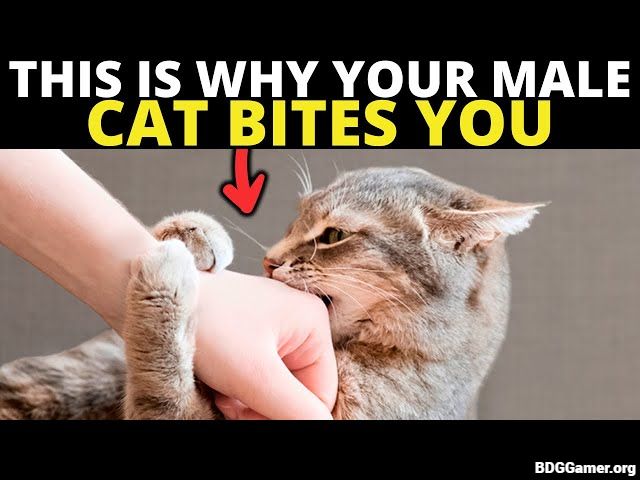
Introduction
Cats are beloved companions, known for their playful and sometimes mysterious behavior. However, one common question cat owners ask is: “why does my cat bite me?” Understanding why your cat bites can help you respond appropriately and improve your relationship with your furry friend.
In this article, we will explore the reasons cats bite, types of cat bites, signs to watch for, and tips to prevent or manage biting behavior.
Common Reasons: Why Does My Cat Bite Me?

Cats bite for several reasons, and understanding these can help you address the behavior. Here are some common causes:
1. Playfulness
Kittens and young cats often use their mouths to explore and play. Play biting is usually gentle, but it can be surprising to humans.
2. Overstimulation
Some cats bite when they are overstimulated, especially during petting. Signs of overstimulation include tail flicking, ears flattening, or sudden jerking movements.
3. Communication
Cats may bite to communicate. For example, a cat might bite lightly to say, “I want attention” or “leave me alone.”
4. Fear or Stress
A frightened or stressed cat may bite to defend itself. This type of biting is usually harder and accompanied by hissing or growling.
5. Medical Issues
Sometimes, biting can indicate pain or discomfort. Cats with dental problems, arthritis, or injuries may bite when touched in sensitive areas.
Types of Cat Bites
Not all cat bites are the same. Understanding the type of bite can help you respond correctly.
1. Play Bites
Play bites are usually gentle and not intended to harm. They occur during playtime or when cats are excited.
2. Aggressive Bites
Aggressive bites are harder and may break the skin. These bites usually happen when a cat feels threatened or is defending territory.
3. Love Bites
Some cats give light, gentle nibbles as a form of affection. This is often seen in cats that trust their owners.
4. Fear Bites
Fear bites happen when a cat feels cornered or threatened. The cat may hiss, growl, or puff up its body before biting.
Signs Your Cat is About to Bite
Recognizing the warning signs can prevent bites and help you handle situations calmly.
- Tail Flicking: A flicking or lashing tail often signals irritation.
- Ears Flattening: Flat or backward ears indicate fear or aggression.
- Dilated Pupils: Wide pupils show excitement, fear, or overstimulation.
- Hissing or Growling: Vocal warnings often precede biting.
- Body Tension: A stiff body or crouched posture indicates readiness to bite.
Why Does My Cat Bite Me During Petting?
Many cat owners wonder why their cats bite during petting sessions. Cats may bite during petting for several reasons:
- Overstimulation: Cats have a petting threshold. Beyond this point, they may react by biting.
- Sensitive Areas: Some cats dislike being touched in certain areas, like their belly or paws.
- Attention-Seeking: Light bites may be a cat’s way of asking for more attention or signaling that playtime is over.
How to Stop Your Cat from Biting
While biting is a natural behavior, you can teach your cat to reduce or stop biting with the following tips:
1. Avoid Using Hands as Toys
Never use your fingers or hands for play. Use toys instead, like strings or balls, to redirect biting behavior.
2. Recognize Warning Signs
Pay attention to body language. If your cat shows signs of overstimulation, stop petting immediately.
3. Positive Reinforcement
Reward your cat with treats or affection for gentle behavior instead of biting. Positive reinforcement encourages better habits.
4. Socialization
Kittens benefit from early socialization, including gentle handling and play with other kittens or humans.
5. Consistent Training
Say “no” firmly and remove yourself when your cat bites. Consistency helps cats understand boundaries.
When to See a Vet
If biting is sudden, aggressive, or accompanied by other unusual behavior, it’s important to consult a veterinarian. Medical conditions like pain, dental issues, or neurological problems may cause unexpected biting.
How to Handle Cat Bites Safely
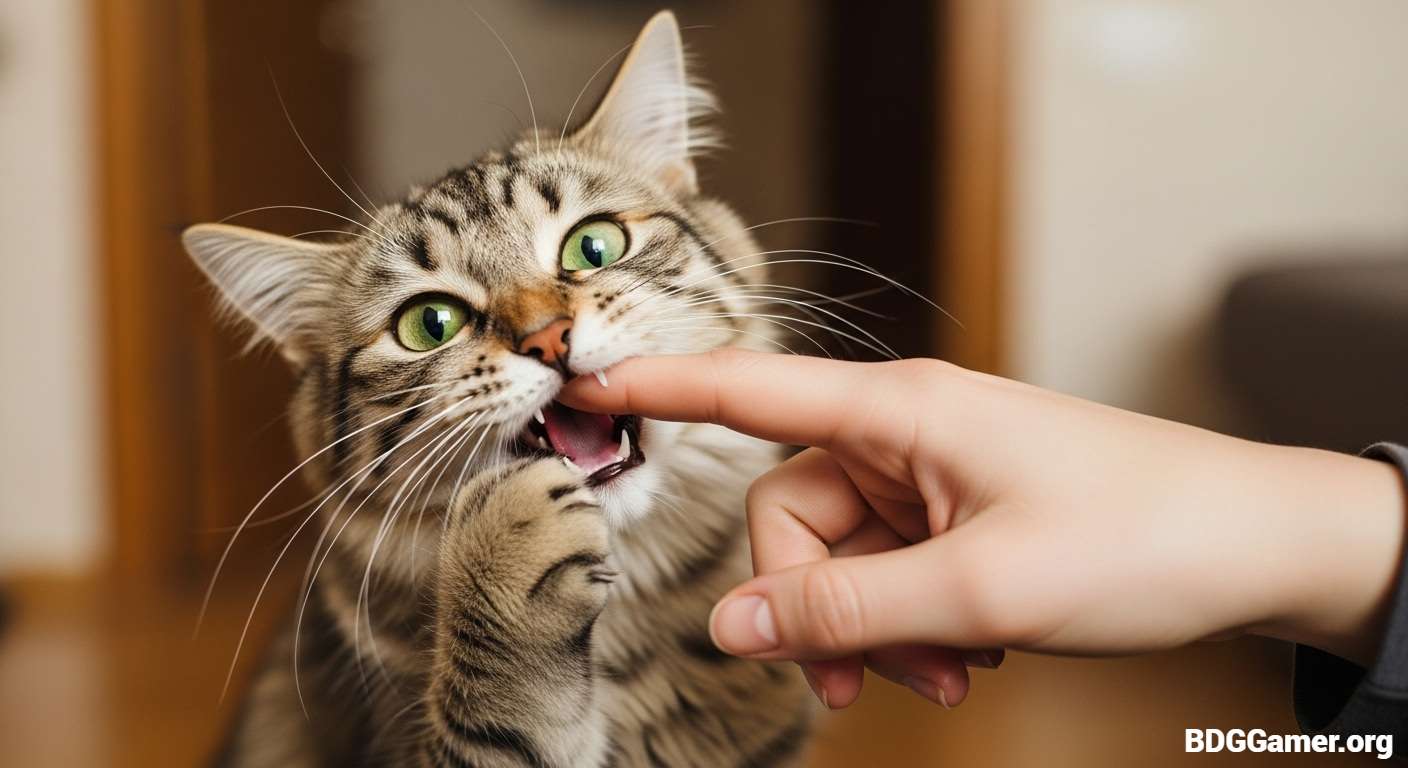
Even minor cat bites can cause infection, so proper care is essential:
- Clean the Wound: Wash the bite area with soap and water immediately.
- Disinfect: Apply an antiseptic to prevent infection.
- Monitor for Infection: Watch for redness, swelling, or pus. Seek medical help if needed.
- Avoid Punishment: Never hit or scare your cat, as this can worsen biting behavior.
Conclusion:
Understanding why does my cat bite me is the first step in improving your relationship with your pet. Cats bite for play, communication, affection, or stress.
By recognizing signs, redirecting behavior, and using positive reinforcement, you can reduce biting and enjoy a happier, healthier bond with your feline friend.
Remember, patience and consistency are key. With proper training and care, biting can become a rare and manageable behavior, allowing you to fully enjoy the companionship of your beloved cat.